More and more children and teens than ever are learning at home. The benefits are clear. Homeschooling gives the advantage of flexibility, academic superiority, efficiency, and the many opportunities that a homeschool family can take advantage of. Education is not a one-size fits all endeavor and homeschooling allows families to learn in the way that best suits them.
Explore some of the history of the homeschooling movement, why some parents choose to homeschool, the basics of homeschooling, and more. The article includes some homeschooling statistics and demographic information. Also included is a discussion of the influences of Dr. Raymond Moore and John Holt on the emerging homeschool movement.
When 13 year-old Logan LaPlante grows up, he wants to be happy and healthy. He discusses how hacking his education is helping him achieve this goal.
The face of homeschooling is changing. We are not all religious extremists or farmers, and our kids are not all overachieving academic nerds without social skills. This article outlines some of the practical advantages of homeschooling.
A look at the academic advantages of choosing to homeschool your child. These benefits come from the opportunity for an excellent education, the inevitability of a dedicated teacher, and education tailored to a child's capabilities and personality, integrated and consistent education, and better teaching materials.
This New York Times articles is written by a veteran homeschooler who explains that home-schooling has a significant advantage in combating the pressure schools place on children, including better use of time and high quality academics.
Most people who have never met a homeschooling family imagine that the kids are socially isolated. But some new research by Brian Ray of the National Home Education Research Institute suggests otherwise. Indeed, Ray's research helps to explain why the number of homeschoolers in America continues to grow. Ray reports the typical homeschooled child is involved in 5.2 social activities outside the home each week. These activities include afternoon and weekend programs with conventionally schooled kids, such as ballet classes, Little League teams, Scout troops, church groups and neighborhood play. They include midday field trips and cooperative learning programs organized by groups of homeschooling families. For example, some Washington, D.C., families run a homeschool drama troupe that performs at a local dinner theater. So, what most distinguishes a homeschooler's social life from that of a conventionally schooled child? Ray says homeschooled children tend to interact more with people of different ages.
This work looks at contemporary Black homeschooling as a form of resistance among single Black mothers, exploring each mother's experience and perspective in deciding to homeschool and developing their practice. It faces the many issues that plague the education of Black children in America, including discipline disproportionality, frequent special education referrals, low expectations in the classroom, and the marginalization of Black parents. Most importantly, this work challenges stereotypical characterizations of who homeschools and why.
While most parents just expect and plan to send their kids to a public school, a growing number of American families are re-envisioning their education philosophy, deciding to teach their children at home. And indeed, there are several advantages to homeschooling, including more family time, using your preferred curriculum, safety, learning at their own pace, and more quality time.
A list of the advantages and benefits of homeschooling for children, parents, and families.
More and more American parents are choosing to educate their children at home. What accounts for this trend? Reasons include faith preferences, the individual approach to education, and a desire for a stronger family unit.
Parents who homeschool their children have three basic complaints against public schools: the lack of academic rigor, the number of maladjusted graduates, and the anti-religious atmosphere. Homeschool advocates claim that homeschooling overcomes these problems. They argue that no matter whether the educational philosophy one holds is that schooling prepares for life or schooling is life, the homeschooled do better. Proponents also claim that private schools are nearly always similar to public schools, so the fundamental criticisms of public schools apply to private schools also, although to a lesser degree. There are two ways to look at the arguments for homeschooling: by personal case histories and by scholarly analysis. Although the true merit of homeschooling probably is best told as a series of case histories, this paper will examine the many studies done on various aspects of homeschooling.
Families opt for homeschooling for various reasons, including worries about the school environment, dissatisfaction with academic instruction, and a desire for religious and moral guidance absent in traditional schools. The decentralized homeschooling population makes it challenging for researchers to pinpoint the precise impact on outcomes like academic achievement. Nevertheless, assessments reveal that homeschooled students excel in this academic setting.
Embarking on homeschooling can offer moments of great satisfaction or moments that push your limits, typically involving a mix of both. How do you ascertain if homeschooling is a good fit for you? What are the strengths and weaknesses associated with homeschooling? Read through these pros and cons for parents and kids to learn more and help you make your decision.
When you have a special needs child, no public school will ever be able to fully cater to their needs. Private schools do exist for many types of special needs, but they can be expensive and often still not fully adapted to your child’s specific situation. Therefore, you might find yourself wondering how to get your child the education that they deserve in a format that works for them. Homeschooling a special needs child is a very advantageous choice for many parents who can afford the time and resources to do so. A homeschool program will allow children with special needs to have their specific needs addressed and also avoid many obstacles that they would face in a traditional classroom. When it comes to children with learning disabilities or other severe impairments, sometimes a parent who understands their special needs is the only one who can teach the child.
 The Homeschooling Advantage: Empowering Your Child’s Education Beyond the Classr...
 The Four-Hour School Day: How You and Your Kids Can Thrive in the Homeschool Lif...
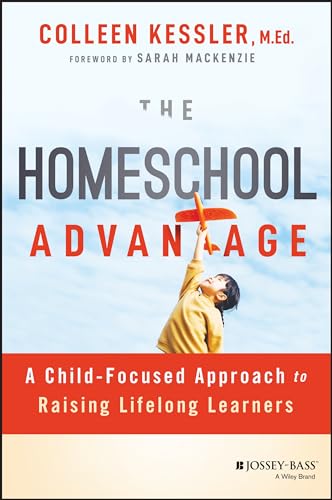
 The Homeschool Advantage: A Child-Focused Approach to Raising Lifelong Learners
 The Advantages of Home Schooling
 Science ~ Southwestern Advantage / Great American , Inc. (Southwestern Advantage...
 Homeschool Advantages: Spiritual, social and academic
 Homeschooling. Homeschooling Guide. Homeschooling Comprehensive Guide Includes: ...





 The Homeschooling Advantage: Empowering Your Child’s Education Beyond the Classr...
